What Makes Haute Couture
A protected name with strict rules. Haute couture is a protected label in France. Who sets the rules, what a couture house must do, and how made-to-measure couture differs from luxury.
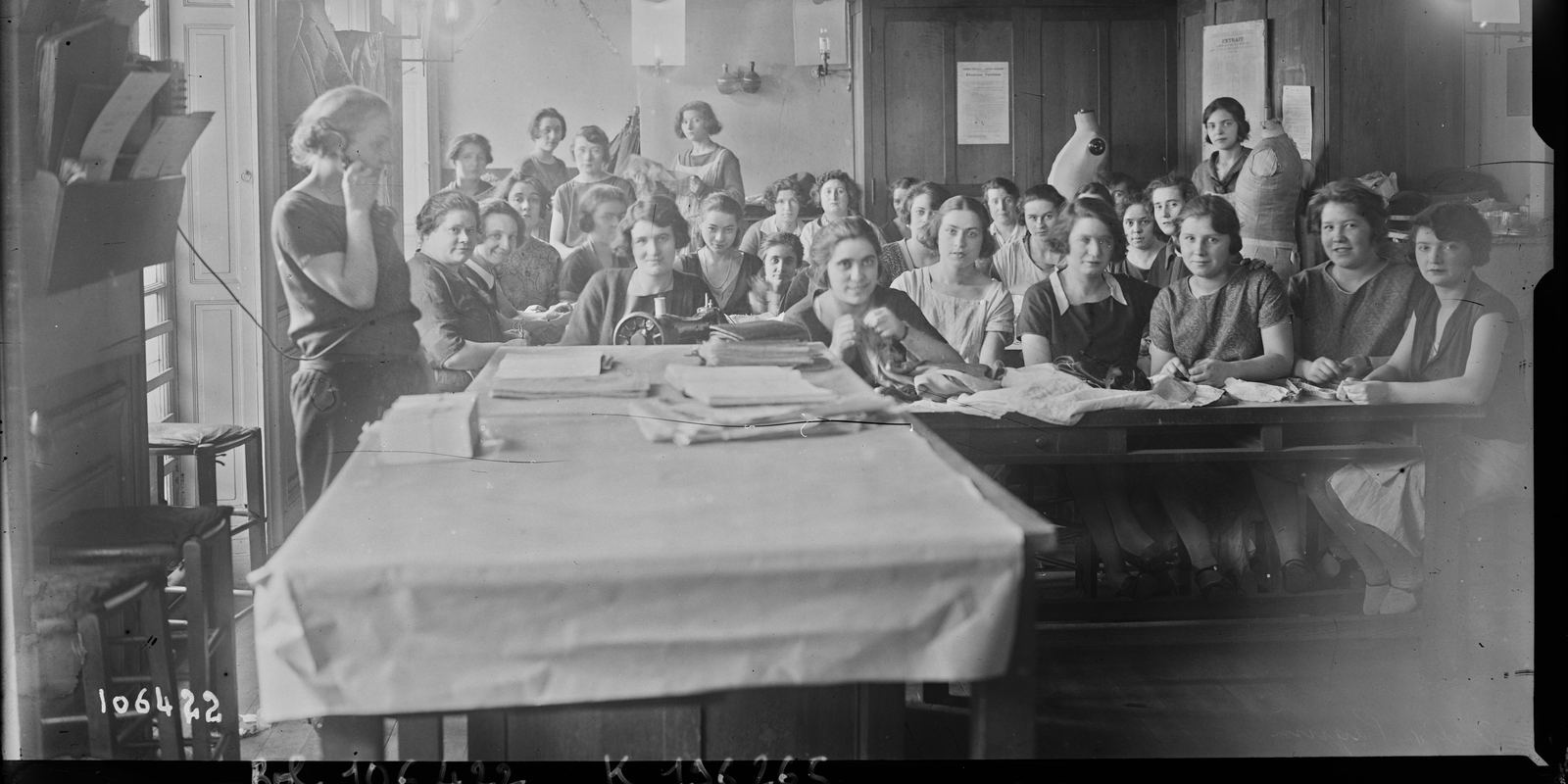
The Paquin couture atelier, 1926: Agence Rol. Agence photographique (commanditaire), Public domain
A protected name
In France, haute couture is not just a phrase. The term is protected by law, and only houses approved each year by a commission linked to the French ministry for industry can call themselves haute couture houses. Others may make beautiful custom clothes but cannot use the label.
The organisation behind the system began in 1868 as the Chambre Syndicale, an association of Paris couturiers formed with the help of the designer Charles Frederick Worth. It regulated matters such as copying, show dates and relations with the press. Since the 1970s it has worked within what is now the Fédération de la Haute Couture et de la Mode.
The rules
Stricter criteria were set in 1945. Under the long-standing rules, a couture house must design made-to-order clothes for private clients with one or more fittings, run an atelier in Paris with a set minimum of full-time staff, and present a collection of original designs each season, in January and July.
Houses that meet only some conditions can join as correspondent or guest members, which is how many designers based outside Paris show during Paris Haute Couture Week.
How a couture piece is made
A couture garment starts with a sketch, then a toile, a trial version in plain cotton, fitted on the client or on a mannequin made to her measurements. Each piece is cut and sewn largely by hand in the house's ateliers, usually split between flou, for soft draped dresses, and tailleur, for structured tailoring.
Specialist workshops supply feathers, embroidery, pleating and hand-made flowers. A complex evening gown can take hundreds of hours of work, which explains why couture is made for a very small number of clients.
Clients normally attend several fittings in Paris, or a team travels to them, and each fitting adjusts the garment millimetre by millimetre. Many houses keep a personal mannequin padded to each regular client's exact shape, so work can continue between visits.
Why it still matters
Haute couture sells far fewer pieces than ready-to-wear, perfume or accessories, but houses see it as their laboratory and showcase. Techniques and ideas tested in couture often influence the rest of the industry.
Old photographs of ateliers such as Paquin in 1926 show the same scene that still exists today: rows of skilled hands working on a single garment, one stitch at a time.
- The Paquin couture atelier, 1926: Agence Rol. Agence photographique (commanditaire), Public domain
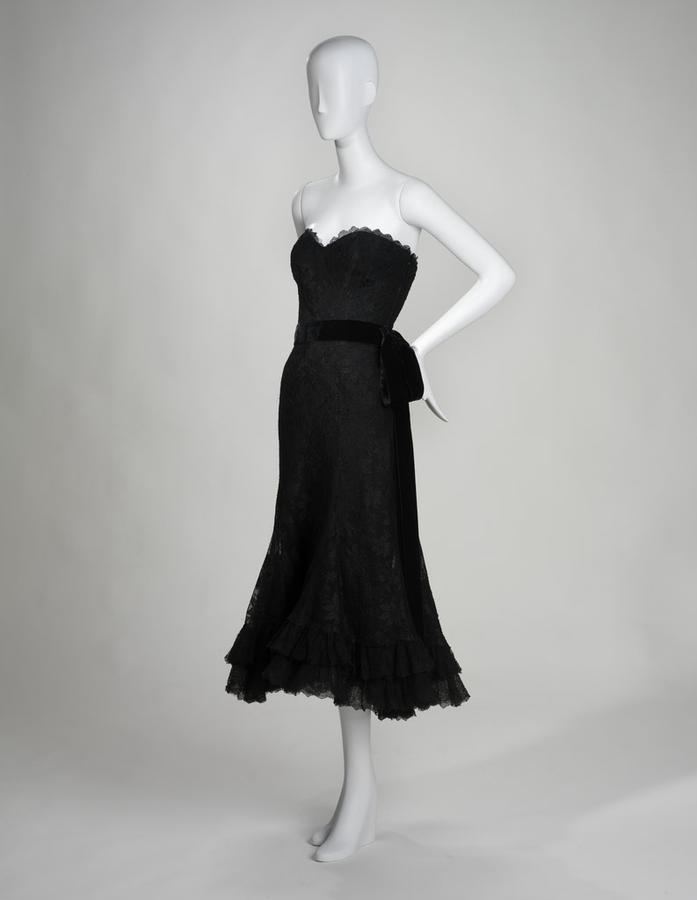
- A 1958 Chanel evening dress: Staff photographer, Rhode Island School of Design Museum of Art, CC0
Text written by Greatest Prestige.