McLaren F1
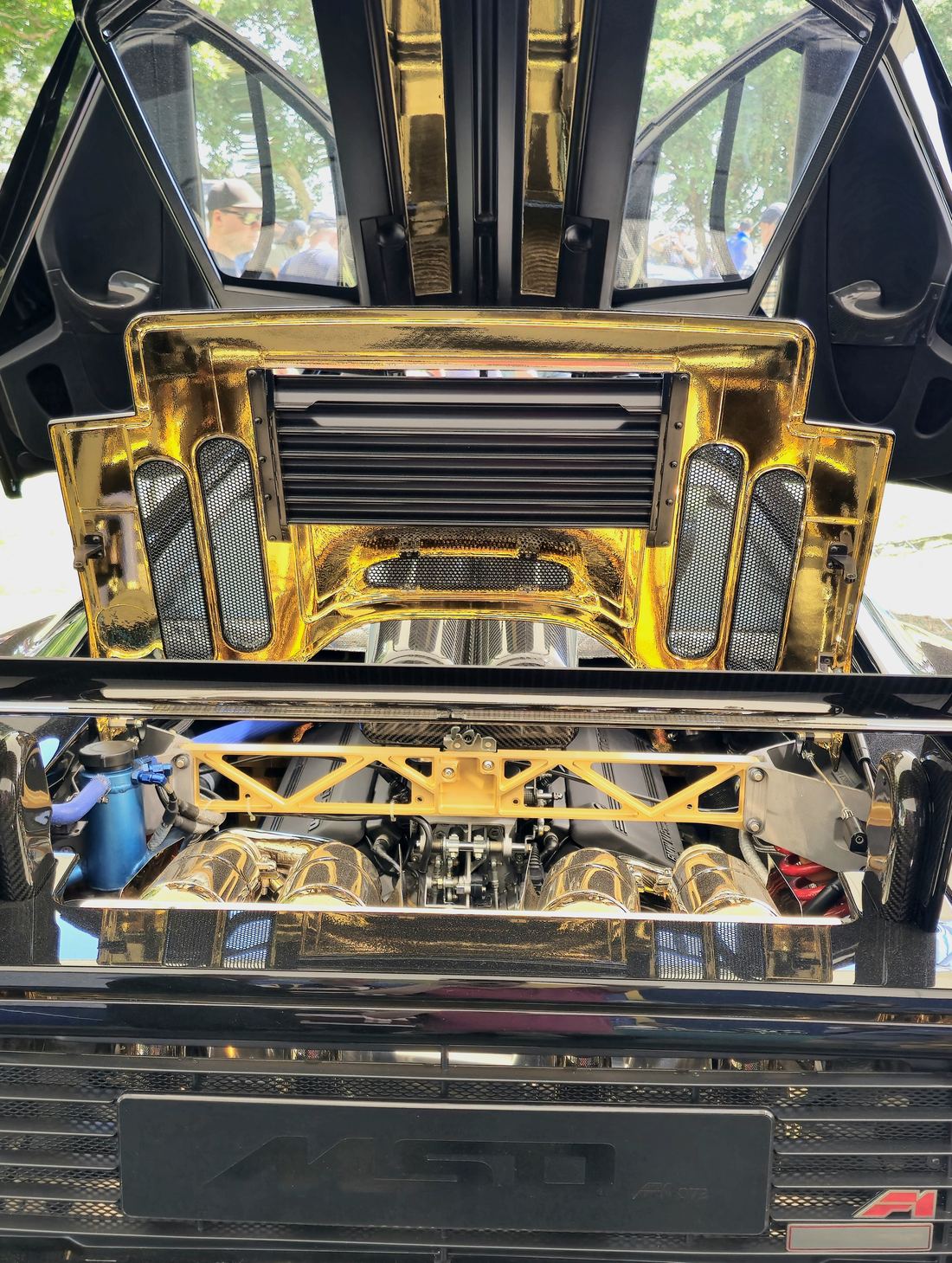
Three seats, a gold engine bay, 240 mph. Gordon Murray's McLaren F1 had a central driving seat and a gold-lined engine bay. Just 106 were built from 1992, and it reached 240.1 mph in 1998.
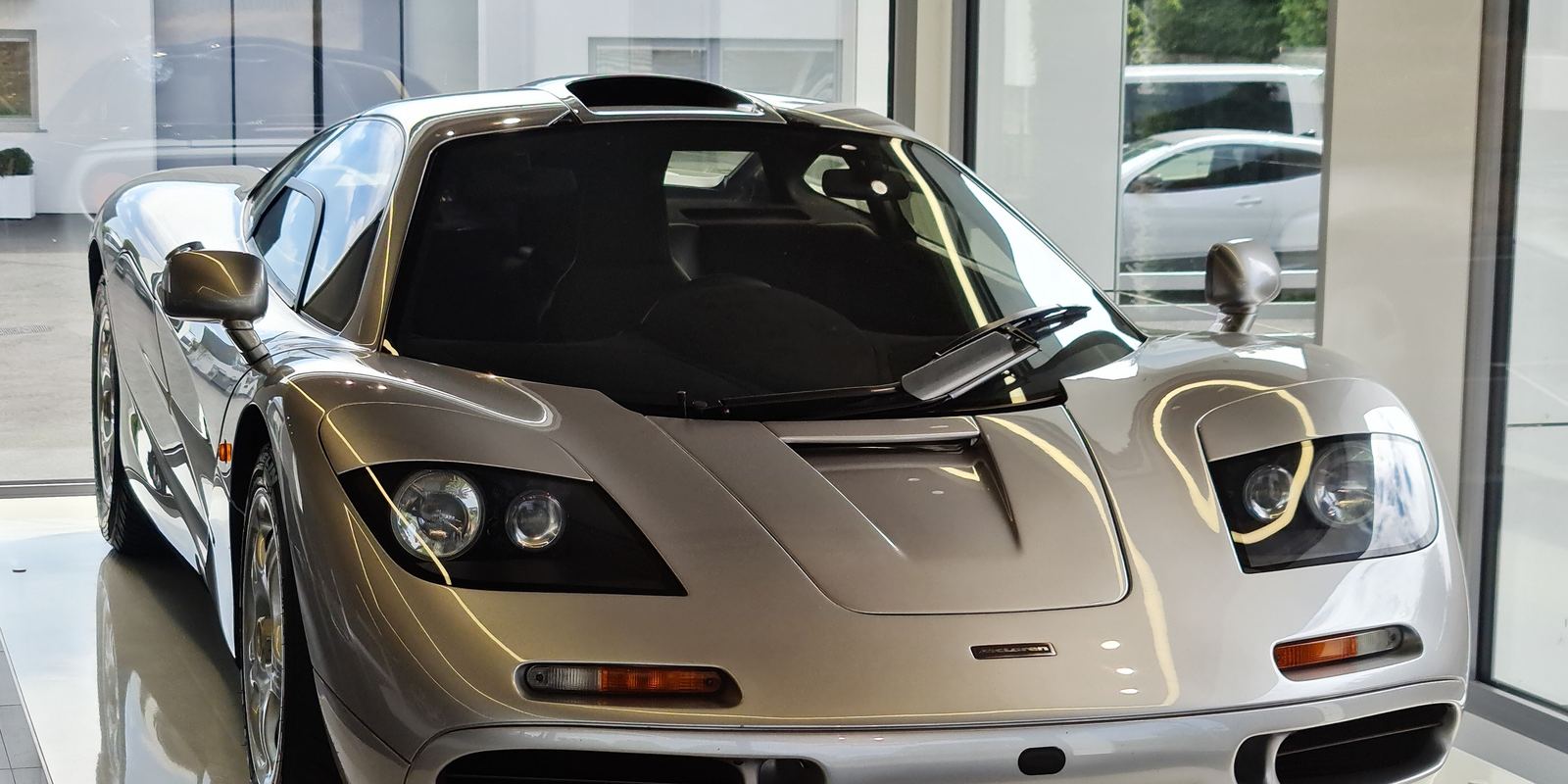
A silver McLaren F1: MrWalkr, CC BY-SA 4.0
A sketch in an airport
Gordon Murray, the designer behind several winning Formula One cars, had dreamed of a three-seat sports car since his youth. Waiting for a flight home from the Italian Grand Prix in 1988, he sketched one and proposed it to McLaren boss Ron Dennis. McLaren Cars was set up to build it.
The car was unveiled in Monaco on 28 May 1992. Production ran from 1992 to 1998, and only 106 cars were made across road, racing and special versions.
Light, strong and unusual
The F1 was one of the first road cars with a full carbon fibre monocoque, a single-piece shell that is both light and stiff. The driver sits in the centre, slightly ahead of two passenger seats, with a clear view down the middle of the car.
Murray chose expensive materials wherever they saved weight or solved a problem, including titanium, Kevlar and magnesium. Most famously, the engine bay is lined with gold foil, because gold reflects heat very well and helps protect the bodywork from the hot V12.
Weight was the enemy throughout. Murray's team set strict targets for every component, down to the tool kit and the stereo, and the finished car weighed little more than many family hatchbacks of its time while carrying a large V12. The doors open upwards and forwards, a style often called dihedral or butterfly, to make it easier to reach the central seat.
The BMW V12
Murray wanted a naturally aspirated engine, without turbochargers, for sharp response. BMW Motorsport developed the S70/2, a 6.1 litre V12 made only for the F1. It gave the car a power-to-weight ratio that was extraordinary for the early 1990s.
On 31 March 1998, a prototype known as XP5, with its rev limiter raised, reached 240.1 mph, or 386.4 km/h, at the Ehra-Lessien test track. That set the Guinness world record for the fastest production car, which stood until the Bugatti Veyron era.
Winning Le Mans
McLaren never planned the F1 as a racing car, but private teams asked for one. Racing versions called F1 GTR won the 1995 24 Hours of Le Mans outright, at the car's first attempt, and McLaren remains the last maker to win Le Mans with a car based on a road-going series production model.
Murray later returned to the same ideas of low weight, a central seat and a high-revving V12 with his own company's T.50.
- A silver McLaren F1: MrWalkr, CC BY-SA 4.0
- The gold-lined engine bay: Calreyn88, CC BY-SA 4.0
Text written by Greatest Prestige.