The Rolex Oyster
How Rolex sealed the wristwatch. In 1926 Rolex launched the Oyster, a sealed wristwatch case built to keep out water and dust. Its history, the Perpetual rotor and later firsts.
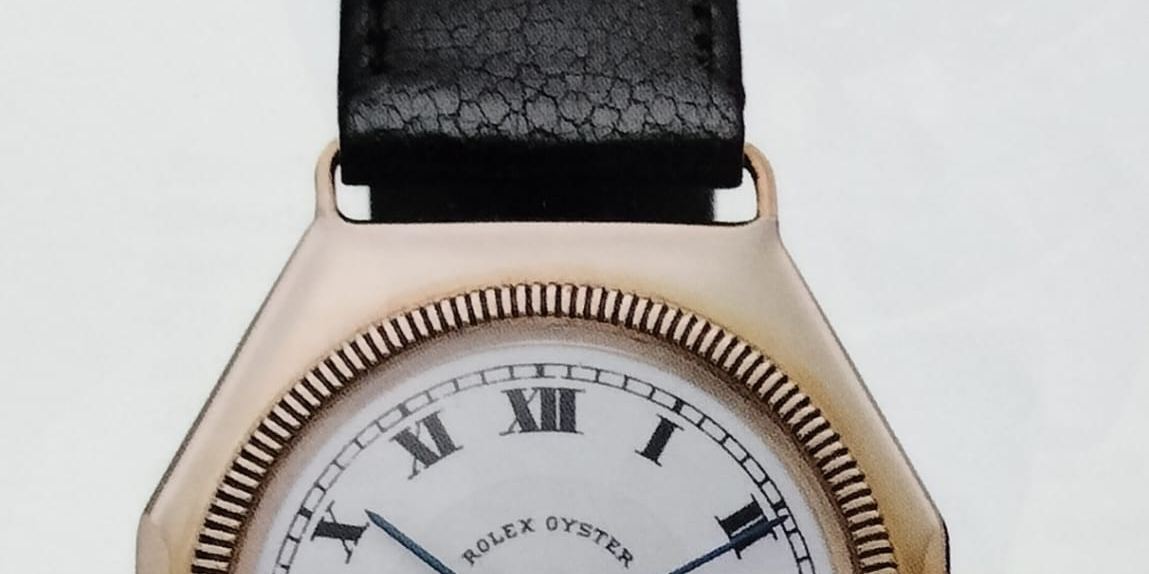
A 1926 Rolex Oyster: Clyde94, CC BY-SA 4.0
From London to Geneva
Rolex began in London in 1905, when Hans Wilsdorf and his brother-in-law Alfred Davis founded Wilsdorf and Davis to import Swiss movements and fit them in cases for the British market. Wilsdorf registered the name Rolex in 1908. He wanted a word that was short enough to fit on a dial and easy to pronounce in any language.
In 1919 Wilsdorf moved the company to Geneva, partly because of high British duties on luxury imports and on the gold and silver used for cases. The firm became Montres Rolex SA and later Rolex SA.
The Oyster case
Early wristwatches had a weakness: dust and moisture crept in around the crown and case back and damaged the movement. In 1926 Rolex introduced the Oyster, a case that screwed tightly closed so that it kept out water and dirt.
To prove the point, Rolex placed Oyster watches in aquariums in shop windows. In 1927 the British swimmer Mercedes Gleitze swam the English Channel wearing one on a ribbon around her neck, and the watch still worked afterwards. Rolex used her swim in its advertising, making her the brand's first ambassador.
The principle behind the Oyster is simple: every opening in the case must be sealed. The bezel, the case back and the winding crown all screw down tightly against the middle of the case, a little like the lid of a jar. That is why owners are still told to screw the crown back in after setting the time.
The Perpetual rotor
Wilsdorf's next goal was a watch that wound itself. In 1931 Rolex patented the Perpetual rotor, a half-moon shaped weight that turns freely as the wrist moves and winds the mainspring. Earlier self-winding designs had struggled, and this one proved practical enough to become the model for automatic watches across the industry.
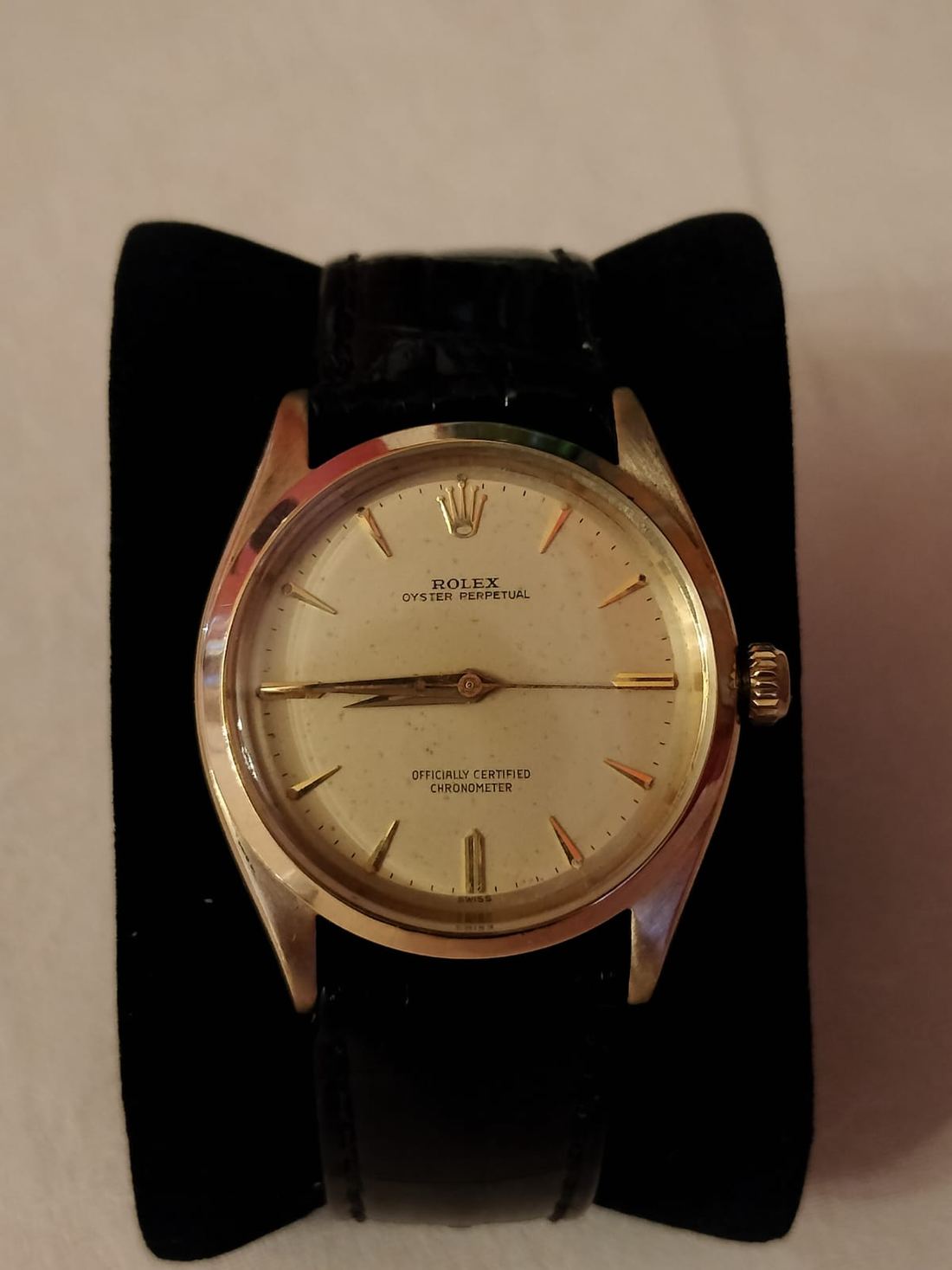
From then on the sealed, self-winding watch was called the Oyster Perpetual, a name Rolex still uses. In 1945 the Datejust added a date in a window that changes automatically, another first for a self-winding chronometer wristwatch.
A watch built for extremes
The Oyster case became the base for the professional models that followed, including dive and expedition watches designed to cope with water pressure, cold and shocks. Many of today's Rolex watches are still Oyster Perpetuals at heart.
Wilsdorf left his shares to the Hans Wilsdorf Foundation, a private Swiss foundation. Since his death in 1960 the foundation has owned Rolex, which is why the company does not publish accounts like a listed business.
- A 1926 Rolex Oyster: Clyde94, CC BY-SA 4.0
- Oyster Perpetual ref. 6564, late 1950s: EMore98, CC BY-SA 4.0
Text written by Greatest Prestige.